I belong to the National Association of Bankruptcy Attorneys (NACBA), and we talk amongst ourselves quite a bit about current bankruptcy issues. NACBA is having an internal debate among some members about what to do about student loans. A few thoughts:
Administrative Remedies
Much of the recent momentum calls for administrative cures, such as total and permanent disability discharge (TPD); the title pretty much says what the program does. Or income based repayments are also a viable option, i.e., payments based on current income with the potential to discharge the debt after so many years of payments. There can be complications such as being in default, i.e., nine months behind. You must “rehabilitate” the loan with nine consecutive timely payments that are “reasonable and affordable” to get into one of the desired repayment programs.
The Private Student Loan Conundrum
The problem: these administrative remedies exist exclusively with federal loan programs. I have not seen every private student loan promissory note, but those that I have read do not offer this kind of flexibility. In fact, almost every term is worse, even the grace periods for starting repayments and obtaining forbearances are typically shorter.
Private loans also do not have administrative remedies like federal loans. If you default on a federal loan, the lender may intercept your tax refund or garnish wages. While not fun, the upside is it happens without a lawsuit.
A lawsuit provides you judicial oversight and your “day in court,” but it is expensive, and litigation is often a traumatic event for most people. And with most student loans, unless there was fraud or something extraordinary about the loan (such as failure to qualify as student loan under the Internal Revenue Manual), you will likely lose. Your best hope is usually to settle
Circular Problem in Bankruptcy
Bankruptcy provides an ostensibly extraordinary remedy for student loans: the possibility of completely or partially discharging your loans. The problem is that it is a unicorn right now. The undue hardship standard that most courts adopted make most student loan discharges unlikely.
The insidious part is the feedback loop created by the expense of litigation. Those that may qualify for a discharge would have to pay their bankruptcy attorneys money to litigate. Those payments to the attorney would often be proof in itself that the client has some ability to pay the loans, defeating their own case under what is commonly known as the Brunner standard (part of the test is that you have no ability to repay your loans now or in the future). And not many of us are lucky enough to have benefactors to subsidize litigation on our behalf. So the discharge of student loans in bankruptcy is a self-defeating proposition under the current standard adopted by most courts: if you dare to contest it, that is proof in itself that you can repay some or all of it - a pretty dumb result.
I do see that some student loans get discharged in bankruptcy. As far as I can tell, most are people that file on their own, or found an attorney to do it pro bono or “low bono.” The lenders typically fight these cases hard, and often appeal when they lose.
Until the Bankruptcy Code is amended, or the courts revisit the Brunner standard that punishes someone for trying to pay for his or her own litigation, bankruptcy is a last resort for dealing with student loans.
Unsatisfying Conclusion
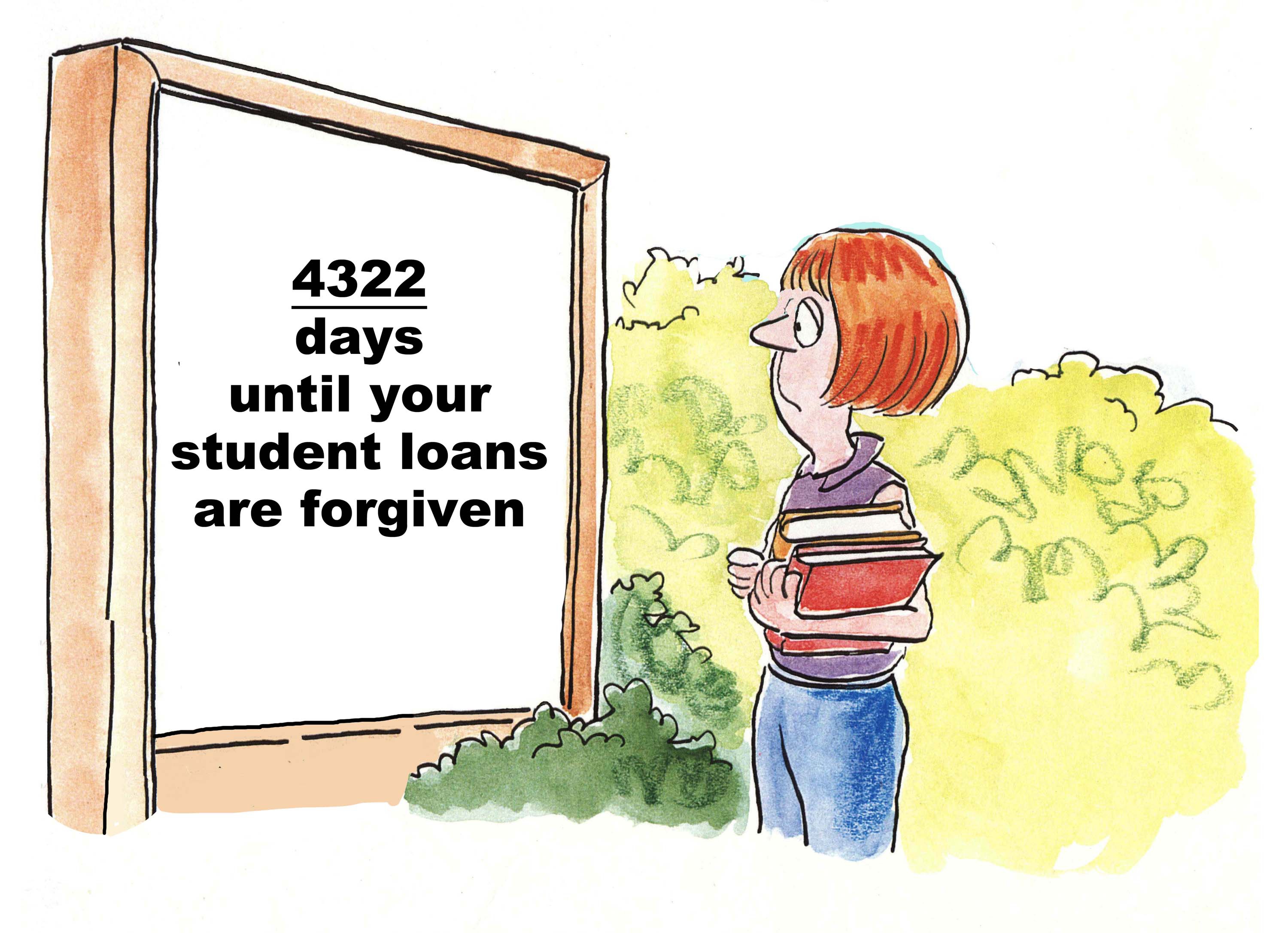
The ultimate remedy is either changing the Bankruptcy Code or getting the courts to revisit the Brunner standard and change course. In other words, get comfortable and grab a book, it’s going to be a while.