
Tag Archives: discharge

The Current Debate Over Student Loans in Bankruptcy

No caption.
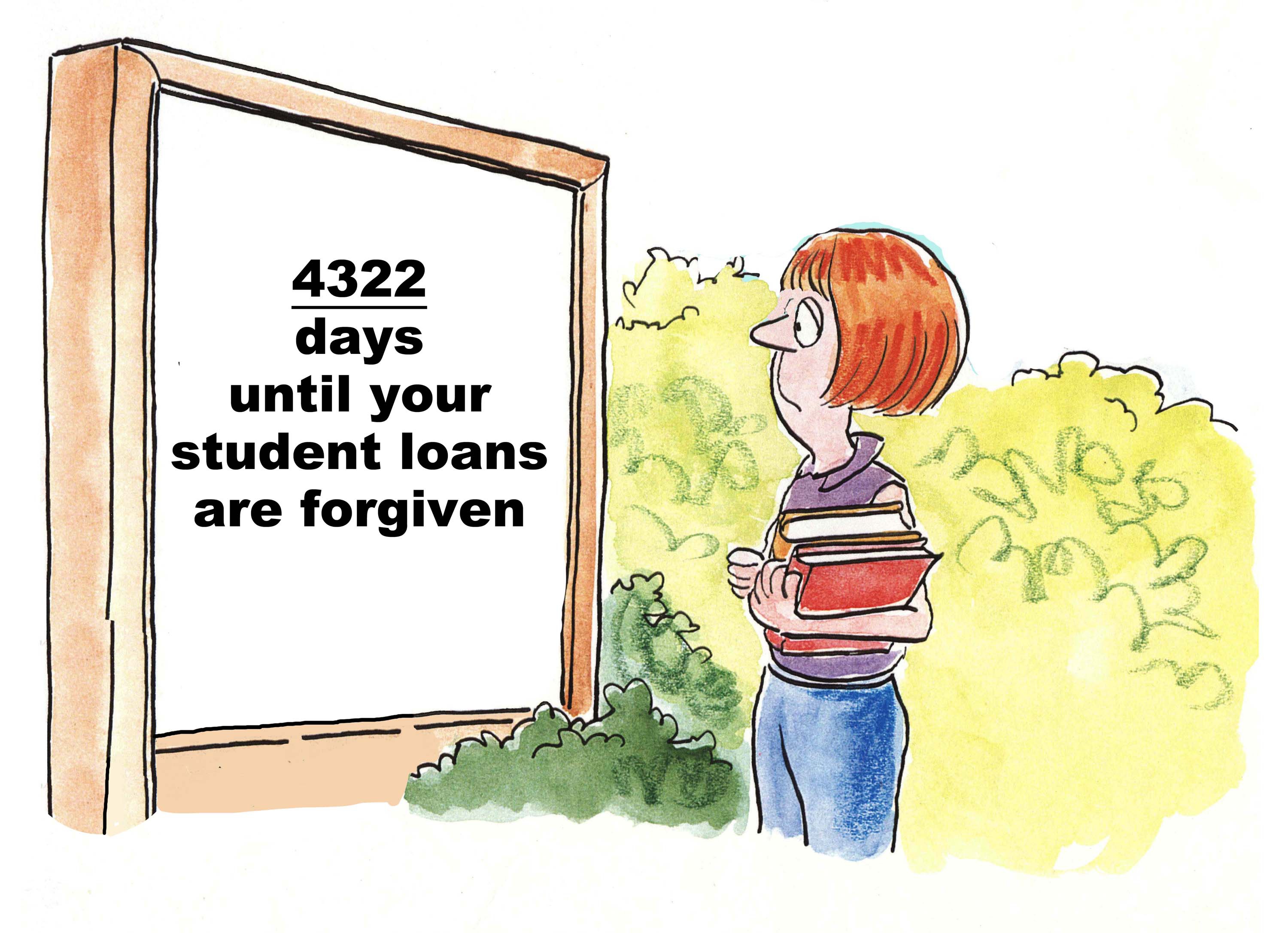
I belong to the National Association of Bankruptcy Attorneys (NACBA), and we talk amongst ourselves quite a bit about current bankruptcy issues. NACBA is having an internal debate among some members about what to do about student loans. A few thoughts:

Administrative Remedies

Much of the recent momentum calls for administrative cures, such as total and permanent disability discharge (TPD); the title pretty much says what the program does. Or income based repayments are also a viable option, i.e., payments based on current income with the potential to discharge the debt after so many years of payments. There can be complications such as being in default, i.e., nine months behind. You must “rehabilitate” the loan with nine consecutive timely payments that are “reasonable and affordable” to get into one of the desired repayment programs.

The Private Student Loan Conundrum

The problem: these administrative remedies exist exclusively with federal loan programs. I have not seen every private student loan promissory note, but those that I have read do not offer this kind of flexibility. In fact, almost every term is worse, even the grace periods for starting repayments and obtaining forbearances are typically shorter.

Private loans also do not have administrative remedies like federal loans. If you default on a federal loan, the lender may intercept your tax refund or garnish wages. While not fun, the upside is it happens without a lawsuit.

A lawsuit provides you judicial oversight and your “day in court,” but it is expensive, and litigation is often a traumatic event for most people. And with most student loans, unless there was fraud or something extraordinary about the loan (such as failure to qualify as student loan under the Internal Revenue Manual), you will likely lose. Your best hope is usually to settle

Circular Problem in Bankruptcy

Bankruptcy provides an ostensibly extraordinary remedy for student loans: the possibility of completely or partially discharging your loans. The problem is that it is a unicorn right now. The undue hardship standard that most courts adopted make most student loan discharges unlikely.

The insidious part is the feedback loop created by the expense of litigation. Those that may qualify for a discharge would have to pay their bankruptcy attorneys money to litigate. Those payments to the attorney would often be proof in itself that the client has some ability to pay the loans, defeating their own case under what is commonly known as the Brunner standard (part of the test is that you have no ability to repay your loans now or in the future). And not many of us are lucky enough to have benefactors to subsidize litigation on our behalf. So the discharge of student loans in bankruptcy is a self-defeating proposition under the current standard adopted by most courts: if you dare to contest it, that is proof in itself that you can repay some or all of it - a pretty dumb result.

I do see that some student loans get discharged in bankruptcy. As far as I can tell, most are people that file on their own, or found an attorney to do it pro bono or “low bono.” The lenders typically fight these cases hard, and often appeal when they lose.

Until the Bankruptcy Code is amended, or the courts revisit the Brunner standard that punishes someone for trying to pay for his or her own litigation, bankruptcy is a last resort for dealing with student loans.

Unsatisfying Conclusion

The ultimate remedy is either changing the Bankruptcy Code or getting the courts to revisit the Brunner standard and change course. In other words, get comfortable and grab a book, it’s going to be a while.


Buzz Kill - No Bankruptcy Relief for Marijuana Grower

marijuana and bankuptcy

I always had a bit of a fascination with marijuana law, and now have seen it cross into the bankruptcy world a few times. As it continues to evolve, it’s been interesting from the legal perspective to watch it develop from an illegal and taboo topic, to a progressively acceptable business model, medical treatment and recreational activity in many parts of the country.

My state of residence California passed the Compassionate Use Act of 1996. This proposition permitted medicinal use of marijuana. But frankly, as far as I can tell, the majority of people using prescription marijuana use the medicinal card as a way to enjoy marijuana recreationally. And maybe that was what was needed in 1996: put the toes in the dirty bong water and see how it feels.

California is poised to place two marijuana initiatives on the ballot in 2016. Both the Marijuana Control, Legalization and Revenue Act of 2016 (MCLR) and California Cannabis Hemp Initiative seek full legalization and regulation of marijuana.

Even assuming one or both of these ballot measures pass, the federal Controlled Substances Act (“CSA”) lists marijuana (or “marihuana” as the CSA says), as a Schedule I drug. One can get licenses and permits from the Drug Enforcement Agency (“DEA”) to use scheduled substances under the CSA, though I am not aware of any recreational growers, distributors or sellers who have obtained such a permit. In other words, something can be perfectly legal under state law, but illegal under federal law or vice versa. And sometimes when the two conflict, there is concept called “preemption,” meaning the federal law overrides the state law.

Enter Frank Anthony Arenas and Sarah Eve Arenas. They are a married couple in Colorado, where recreational marijuana was legalized in 2012. Mr. Arenas obtained all appropriate permits and licenses to produce and distribute marijuana legally under Colorado law. In 2014, the couple filed for Chapter 7 bankruptcy.

The United States Trustee, which is a division of the Department of Justice (“DOJ”) that would actually prosecute the violations of the CSA, moved to dismiss the Chapter 7 bankruptcy. The court found that while the growing and distribution of marijuana under Colorado law was legal, the same conduct was a criminal offense under federal law via the CSA and dismissed the bankruptcy case.

The court pointed to two problematic issues that were triggered by the bankruptcy case.

First, a debtor in bankruptcy is seeking to avail himself or herself to the benefits and protections of federal bankruptcy law, while continuing to violate another federal law, the CSA. This was an internal inconsistency that the court could not reconcile.

Second — and I thought this was a more interesting point in the bankruptcy context — sometimes Chapter 7 bankruptcies like the one filed by the Arenas’ is what is referred to as an asset case. It means that a Chapter 7 trustee may take and liquidate some of your assets. In this case, the trustee was faced with the potential prospect of liquidating marijuana and marijuana business-related materials. By operation of the bankruptcy code and rules, the Chapter 7 trustee is a fiduciary charged with selling assets to pay back unsecured creditors. In other words, the Chapter 7 trustee would be forced to engage in the potential illegal activity of selling marijuana and marijuana business equipment in violation of the CSA in order to recover money for the creditors. The court found it to be a strange outcome that a trustee could be forced to engage in criminal activity, and thus dismissed the case.

The court referenced the infamous Cole memo from 2013. In that memo, James Cole, the Deputy Attorney General for the DOJ acknowledges that states are legalizing marijuana, and essentially states that the federal government will look the other way if certain conditions are met, such as not selling to minors, not shipping interstate into a state where it is not legal, etc. But as the Arenas court noted, it’s a memo, not the law. It provides no guarantees of any kind that compliance with state laws that legalize marijuana in various forms means the feds won’t be knocking on your door some day if you are taking advantage of such state laws.

The Arenas have appealed, so this will rear its head again the future.

There are growers all over California with pretty large swaths of land dedicated to marijuana growth and distribution. Businesses that were once black market only, continue to gain credibility, albeit under the guise of medicinal marijuana at the moment given the current restrictions in California.

I admire those who take the risk of openly operating such businesses in the face of a potential federal crackdown at any moment. It has a bit of Boardwalk Empire / prohibition, mixed with an entrepreneurial spirit. But I suspect bankruptcy courts will not blaze any new trails (pun totally intended) in favor of debtors operating businesses related to marijuana until the federal laws are changed.


Bankruptcy Alphabet - N is for Notice

It is common to refer to the most important feature in buying real estate as, “location, location, location.” Bankruptcy has a similar expression about two different points: Disclosure, disclosure, disclosure and notice, notice, notice. Since we’re on the letter N, and you read the title, I trust that you can figure out which one we’re discussing here.

Bankruptcy is sometimes described as an extraordinary remedy by the courts. What they mean is that bankruptcy is a privilege and you are getting a heck of deal. The trade off is that you must disclose everything in financial terms required by the court, and notify everyone relevant.

Who gets notice?

When you file bankruptcy, anyone you owe money to must be disclosed. That’s the disclosure part. But you also have to list their address among other information. This is because the court takes these names and addresses of your creditors and creates something called a creditor matrix. That’s a fancy way of saying it created a list of people you money to. The court mails each person on this list a notice of your bankruptcy filing so that the creditor is aware you filed. This provides each creditor notice of the hearing date of your 341 meeting of creditors and deadlines for them to act.

Why is notice so important?

First, you want everyone you owe to know that filed because they will stop contacting you. No more calls and threatening letters. And if they do contact you after you file, you may be able to bring a claim against your creditors in bankruptcy court. Kind of nice when a misbehaving creditor is forced to pay for your bankruptcy.

Second, failure to list a creditor may mean that you still owe them. For example, in Chapter 13 your creditors receive notice of your filing. The creditor then files a proof of claim describing what you owe them. Let’s say you have a credit card with Chase, and you owe them $20,000. Assume your Chapter 13 is a 10% plan, meaning unsecured creditors get 10% over the life of your Chapter 13, and the remaining 90% is discharged when you complete your Chapter 13. So Chase would be paid $2,000 (10%), and you get rid of $18,000. Good deal. But it only works if Chase was notified. If not, you will still owe Chase $20,000.

Third, intentional failure to list or notify anyone is the worst idea ever. I sometimes see this when clients owe family or friends. Whether it’s embarrassment or not wanting to “involve” this other person in the bankruptcy process, it will backfire. It’s fraudulent to intentionally fail to disclose and notice all creditors. If you’re playing these kind of games, you can lose your discharge in its entirety, meaning you will still owe all creditors. If you’re really playing games, you can go to prison.

Take advantage of this extraordinary remedy called bankruptcy, but just follow the rules. And the rule for today is notice, notice, notice.